← Blog · 📝 Article · 20 July 2026
Machine learning horse racing: predictions that pay

Machine learning horse racing is the practice of applying data-driven algorithms to predict race outcomes with greater accuracy than traditional form reading. ML pipelines achieve top-3 finish accuracy of 52%, compared to the market favourite win rate of just 31%. That gap represents real edge for punters who understand how these models work. Donkeyradar uses advanced statistical analysis to identify the weakest horse in a race, and the same predictive logic underpins the most effective ML approaches in the sport today.
What data features drive machine learning horse racing models?
The features you feed a model matter far more than the algorithm you choose. Feature weights in proven pipelines show historical place rate carrying 25% of the predictive weight, with final 3F pace time at 20%. These two features alone account for nearly half the signal in a well-built model.

The remaining weight is distributed across several supporting variables. Inverse odds (the implied probability from market prices) carries 15%, jockey win rate adds another 15%, and weight change contributes 10%. Last 3F time versus the previous race and best time on record each add further refinement. Together, these features capture both form and market sentiment.
| Feature | Weight | Rationale |
|---|---|---|
| Historical place rate | 25% | Consistent finishing position across multiple races |
| Final 3F pace time | 20% | Late-race speed is the strongest physical indicator |
| Inverse odds | 15% | Market consensus encodes collective wisdom |
| Jockey win rate | 15% | Rider skill materially affects outcome |
| Weight change | 10% | Significant changes signal trainer intent |
| Last 3F vs previous race | 10% | Measures improvement or decline in form |
| Best time on record | 5% | Sets an upper ceiling for expected performance |
Missing or incomplete records are the most common obstacle when building these datasets. Races with sparse historical data produce unreliable feature values, which then corrupt the model’s output. The solution is not to fill gaps with averages but to flag and filter those records before training begins.
Pro Tip: Build a completeness check into your data pipeline before any modelling step. Records missing more than two key features should be excluded entirely, not imputed.
What model types work best for horse race outcome predictions?
Start with logistic regression as your baseline. Logistic regression is the recommended starting point before moving to gradient boosting methods such as XGBoost and LightGBM for improved accuracy. A baseline model tells you whether your features carry genuine signal before you invest time in more complex architectures.
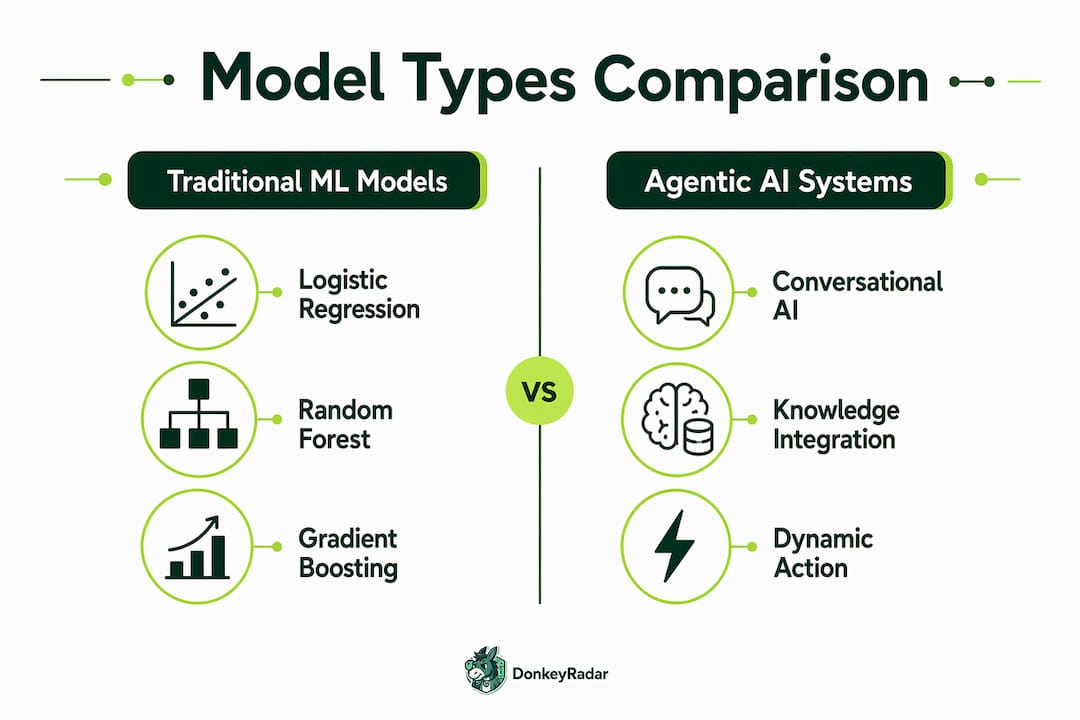
Once the baseline is established, gradient boosting methods consistently outperform simpler models on structured tabular data like race records. XGBoost and LightGBM both handle missing values natively, which matters in horse racing datasets where gaps are common. They also produce feature importance scores, giving you a direct read on which variables are doing the work.
The workflow that produces reliable results follows a clear sequence:
- Collect and clean raw race data from verified sources.
- Engineer features that capture pace, form, and market signals.
- Split data using time-based train and test sets, never random splits.
- Train a logistic regression baseline and record its accuracy.
- Train XGBoost or LightGBM and compare against the baseline.
- Generate ranked predictions and run backtests on held-out data.
- Evaluate weekly and retrain as new race data accumulates.
Time-based train-test splits are non-negotiable. Using a random split means future race data leaks into your training set, producing accuracy figures that collapse the moment you go live. Always train on earlier races and test on later ones.
Pro Tip: Run your weekly evaluation cycle on a fixed day. Consistency in retraining schedules prevents model drift and keeps your predictions calibrated to current form.
Backtesting is where most amateur models fail. Punters run a model on historical data, see a positive return, and assume the edge is real. Proper backtesting uses calibrated probabilities and decision layers to confirm that the model’s confidence scores match actual outcomes. A model that says 60% confident should win roughly 60% of the time in that bracket.
How does data quality affect predictive analytics in horse racing?
Data quality is the single most important factor in model accuracy. Implementing a Data Quality Score filter improves accuracy by over 10 percentage points. That is a larger gain than switching from logistic regression to XGBoost in most cases.
The Data Quality Score, or DQS, assigns a numerical rating to each race record based on completeness and consistency. Records scoring below 60 are discarded before training. This sounds aggressive, but keeping low-quality records actively harms the model by introducing noise that drowns out genuine signals.
Common data quality pitfalls include:
- Incomplete entries: Races missing pace data, weight, or jockey records skew feature distributions.
- Duplicate records: The same race appearing twice inflates the apparent frequency of certain outcomes.
- Stale form data: Using results from races more than 12 months old without decay weighting distorts current form signals.
- Inconsistent identifiers: Horse names with spelling variations across data sources create phantom duplicates.
Pipeline efficiency also matters. Reducing N+1 queries to batch queries cut one pipeline’s evaluation time from 8 minutes to under 1 minute. Faster pipelines mean you can retrain more frequently and respond to form changes before the market adjusts.
Pro Tip: Audit your data source monthly. Providers occasionally change field formats or drop variables without notice. A silent schema change can corrupt your entire feature set without triggering an obvious error.
How are agentic AI systems changing horse racing betting in 2026?
The most significant shift in AI betting strategies is the move from static prediction scores to conversational, explainable systems. Paddock PRO, developed by TwinSpires, processes over 500 individual statistics using Amazon Bedrock LLM technology to deliver real-time insights and wagering evaluation. That scale of data processing is beyond any manual form reader.
These agentic systems combine knowledge bases with action groups, allowing them to answer specific questions about a race rather than simply outputting a ranked list. A punter can ask why a particular horse is flagged as a risk, and the system generates a reasoned explanation drawing on its full statistical context. This is a qualitative leap from a spreadsheet model.
LLMs like Claude add a reasoning layer that accounts for the final stage of pipeline development but provides crucial auditability. The model does not just say “horse 4 finishes third.” It explains which features drove that prediction and flags any data quality concerns. That transparency builds justified confidence in the output.
The distinction between traditional models and agentic AI systems is worth understanding clearly:
| Capability | Traditional ML model | Agentic AI system |
|---|---|---|
| Output format | Ranked probability list | Conversational explanation with reasoning |
| Data volume | Dozens of features | 500+ statistics in real time |
| User interaction | None | Natural language queries |
| Explainability | Feature importance scores | Full reasoning audit trail |
| Wager structuring | Manual | Assisted with guardrails |
Modern AI in horse racing augments player decision-making rather than replacing it. The best systems create what practitioners call a “knowledge sphere,” giving punters access to statistical depth that was previously available only to professional analysts. The decision to bet, and how much, still rests with the individual. Donkeyradar’s approach reflects this same principle: the algorithm surfaces the signal, and the punter acts on it with full transparency.
Key takeaways
Machine learning improves horse racing predictions by combining rigorous data quality management, time-based model validation, and explainable AI reasoning layers to produce accuracy well above market baseline.
| Point | Details |
|---|---|
| Feature selection drives accuracy | Historical place rate and final 3F pace together account for 45% of predictive weight. |
| Data quality beats model complexity | A DQS filter adds over 10 percentage points to accuracy, more than switching algorithms. |
| Time-based splits prevent leakage | Always train on earlier races and test on later ones to get honest accuracy figures. |
| Agentic AI adds explainability | Systems like Paddock PRO process 500+ statistics and generate reasoned, auditable outputs. |
| Prediction and wagering are separate skills | Calibrated probabilities must be paired with sound staking strategy to produce consistent returns. |
Why data integrity beats model complexity every time
The punters I see struggle most with ML-based betting are not the ones using simple models. They are the ones chasing complexity while ignoring their data pipeline. A gradient boosting model trained on dirty data will consistently underperform a logistic regression model trained on clean data. That is not a theoretical point. It shows up in the results every week.
The other misconception I encounter regularly is treating prediction accuracy and wagering strategy as the same problem. They are not. Effective betting requires calibrated probabilities and separate decision layers for staking. Fractional Kelly sizing, for example, controls how much you risk per signal based on your confidence level. A model with 52% top-3 accuracy is genuinely useful, but only if your staking approach matches the variance profile of that accuracy.
For anyone starting out, my honest advice is this: spend 80% of your early effort on data collection and cleaning. Build the simplest model that works. Then, once you trust the pipeline, layer in more sophisticated techniques. The weekly evaluation cycle is not optional. Markets shift, trainers change tactics, and horses come in and out of form. A model you trained six months ago and never retrained is not a model. It is a historical artefact.
The future of AI in this sport is not about replacing the punter’s judgement. It is about giving you access to the same depth of analysis that professional syndicates have always had. That is a genuine leveller, and it is why this space is worth taking seriously.
— Donkey
Lay betting and machine learning: how Donkeyradar puts it together
Predictive analytics does not only help you back winners. It is equally powerful for identifying horses that will not win, which is the foundation of lay betting on Betfair. When a model flags a horse as a weak finisher with high confidence, laying that horse becomes a data-backed decision rather than a hunch.
Donkeyradar applies advanced statistical analysis to UK, Australian, and US races, processing historical strike rates and live market prices to generate lay signals before each race starts. The platform’s algorithm carries an over-85% strike rate, with all signals published in advance and results tracked transparently. Betting profits in the UK are tax-free, which makes a verified edge worth considerably more in practice. If you want to see how machine learning signals translate into lay betting decisions, the Betfair lay betting strategy guide is the clearest starting point.
FAQ
What is machine learning in horse racing?
Machine learning in horse racing is the use of statistical algorithms to analyse race data and predict outcomes. Models trained on features like historical place rate, pace times, and jockey win rate can achieve top-3 finish accuracy of 52%, outperforming the market favourite win rate of 31%.
Which features matter most in a horse racing prediction model?
Historical place rate carries the highest weight at 25%, followed by final 3F pace time at 20%. Together these two features account for nearly half the predictive signal in a well-built model.
How does data quality affect horse racing AI predictions?
Data quality is the single most important factor. Implementing a Data Quality Score filter that removes records scoring below 60 improves model accuracy by over 10 percentage points, a larger gain than upgrading the algorithm itself.
What is the difference between traditional ML models and agentic AI systems?
Traditional models output ranked probability lists, while agentic AI systems like Paddock PRO process 500+ statistics and respond to natural language queries with full reasoning explanations. The agentic approach adds transparency and assists with wager structuring.
Can machine learning improve lay betting strategies?
Yes. Models that identify weak finishers with high confidence provide a direct signal for lay betting. Donkeyradar applies this logic to generate verified lay signals with an over-85% strike rate across UK, Australian, and US races.