← Blog · 📝 Article · 25 August 2026
Lay betting checklist: what to confirm before every bet
Before you place a lay bet, calculate the liability, check it sits inside your bankroll limit, then work through the checklist below. Lay betting means betting against an outcome, backing it not to happen. That flips the risk profile: your liability, not your stake, is what you can lose.
Run through this before clicking “place bet”:
- Confirm you have the right event, market and selection.
- Calculate liability using (odds − 1) × stake.
- Keep liability within 1–5% of your total bankroll.
- Check market liquidity so your stake will actually match.
- Set a stop-loss and know your exit before you enter.
- Confirm the exchange commission rate and matched status.
- Place the bet, then log it immediately.
Worked example: lay a horse at odds of 4.0 for a £10 stake. Liability is (4.0 − 1) × £10 = £30. If the horse loses, you keep the £10 minus commission. If it wins, you pay out £30.
Key Takeaways
Effective lay betting depends on calculating liability correctly, sizing stakes to 1–5% of bankroll, and checking liquidity before every trade.
| Point | Details |
|---|---|
| Calculate liability first | Use (odds − 1) × stake before placing any lay, every single time. |
| Cap liability per bet | Keep individual bet liability to 1–5% of total bankroll. |
| Factor in commission | Exchange commission of 2–5% must be built into your required strike rate. |
| Focus on liquid markets | Check matched volume and skip thin markets to avoid unmatched stakes. |
| Verify with published data | DonkeyRadar publishes signals pre-race with a tracked strike rate. |
Table of Contents
- How to place a lay bet on an exchange
- Liability and bankroll management: exact calculations and safe limits
- Which markets and strategies work best for laying
- Common mistakes, red flags and quick rules to avoid blowing your bank
- Practical tools and calculators to use before you lay
- Publisher proof and verified results (DonkeyRadar evidence)
- Author perspective: discipline over confidence
- How DonkeyRadar helps you follow this checklist
- Sources
How to place a lay bet on an exchange
Open the exchange, find the correct sport, then the specific event and market. Horse racing and football throw up dozens of near-identical fixtures, so check the race time or kick-off before you touch the lay column, not after.
Once you’ve confirmed the runner or team, locate the lay price, usually shown in pink beside the back price in blue. Enter your stake, and the exchange calculates liability for you automatically using the same formula covered above: (odds − 1) × stake.
- Select the market (for example, “Match Odds” or “Win Market”).
- Click the lay price next to your chosen selection.
- Enter your stake, for example £20 at odds of 3.0.
- Check the liability shown, here it would be £40.
- Confirm your account balance covers that liability.
- Submit the bet and watch for “matched” or “unmatched” status.
If the price moves before your stake matches, the bet stays open at your chosen odds rather than filling at a worse price. That protects you, but it also means unmatched bets can sit idle through a race. Cancel and reassess if a bet hasn’t matched within a sensible window.
In-play lay betting behaves differently again. Prices swing faster, and liquidity can vanish in seconds after a goal or a fall. Beginners generally do better sticking to pre-off markets until they’ve built confidence, and even then, step-by-step guides recommend avoiding the thin final minutes before an event starts, when spreads widen and matching gets unreliable.
Quick stat check: exchange commission typically runs 2 to 5% on net winnings, which needs factoring into every liability decision you make, not just totted up afterwards.
Liability and bankroll management: exact calculations and safe limits
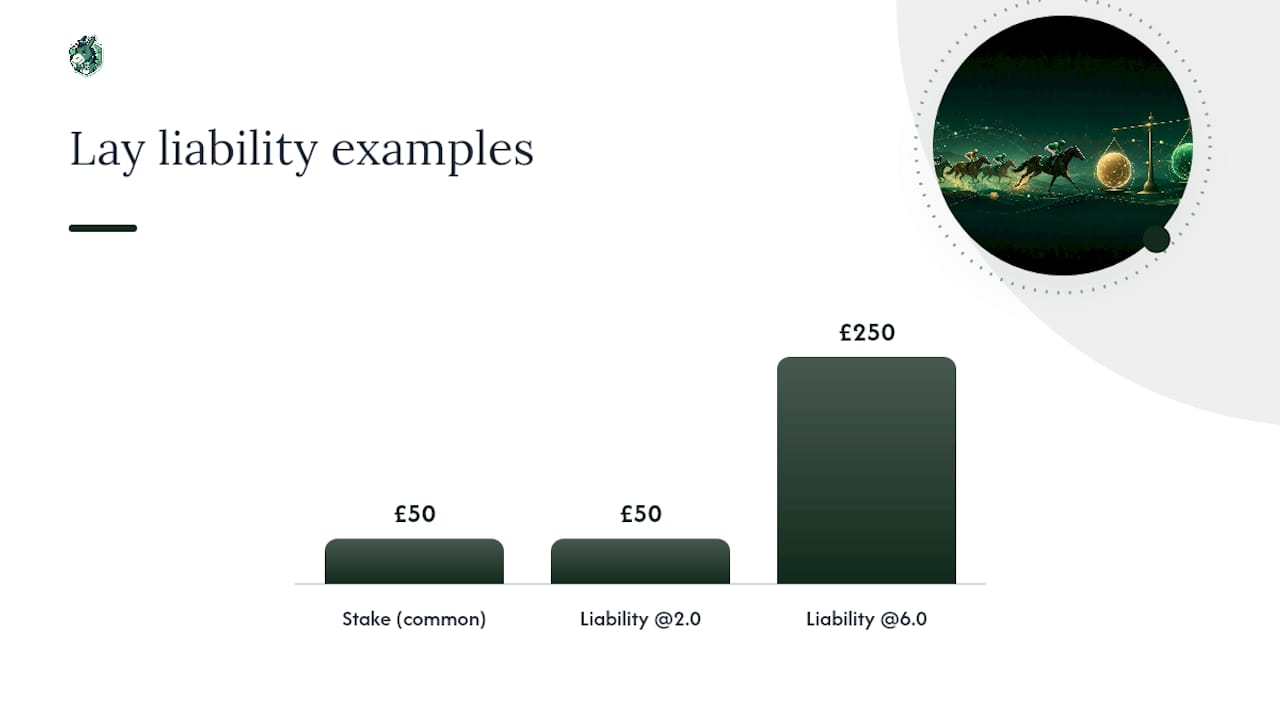
The liability formula never changes: (odds − 1) × stake = liability. Lay a selection at 2.0 for £50, and your liability is £50. Lay one at 6.0 for the same £50 stake, and liability jumps to £250. Same stake, wildly different risk, which is precisely why odds selection matters as much as stake size.
Most experienced layers cap liability per bet somewhere between 1% and 5% of total bankroll. On a £1,000 bankroll, that means keeping single-bet liability between £10 and £50. Go higher and one bad run can wipe out weeks of gains in an afternoon.
Build in daily and weekly caps too:
- Stop laying after three consecutive losses in a session.
- Set a hard daily loss limit, for example 5% of bankroll.
- Review weekly totals before increasing stake size again.
Commission complicates the maths further. At a 2 to 5% commission rate, a strategy with a thin theoretical edge can slip into loss once fees are deducted. Factor commission into your required strike rate before you ever place a bet, not as an afterthought when you’re checking your monthly P&L.
Which markets and strategies work best for laying
Match odds and horse racing win markets are the most forgiving starting points for new layers, mainly because liquidity tends to be deep and prices move predictably. Football’s “lay the draw” is a long-standing tactic too, built on the fact that draw prices often drift once a team scores, giving you a chance to trade out for profit regardless of the final result.

Focus on odds in a moderate range where liability stays proportionate to stake. At this range, liability stays proportionate to stake. Public betting patterns tend to overprice short-priced favourites, which is exactly the inefficiency lay bettors are hunting for.
Two core approaches worth understanding early:
- Back-to-lay: back a selection, then lay it later at longer odds to lock in profit if the price drifts your way.
- Lay-to-back: lay first, then back later at shorter odds if the price falls, again locking a profit before the event finishes.
Always check matched volume before committing. A market showing a few hundred pounds matched an hour before the off is a red flag, not an opportunity.
Pro Tip: Check the exchange’s liquidity graph before entering a lay, not just the current odds. A price can look attractive and still be unmatchable if depth behind it is thin.
Common mistakes, red flags and quick rules to avoid blowing your bank
Misreading liability is the single most common beginner error, laying a big-priced outsider without registering that the liability, not the stake, is what’s actually at risk. Ignoring commission compounds it further, and staking emotionally after a loss compounds it worse still.
Watch for these red flags:
- Very low matched volume or a thin order book.
- Late scratches, non-runners, or team news breaking minutes before kick-off.
- Odds that have moved sharply without an obvious reason.
Seasoned Betfair traders consistently flag the same failure pattern: no stop-loss, no daily limit, and increasing stake size straight after a losing bet to “chase” it back. Build the opposite habit instead. Always calculate liability first, cap your losses for the session, and never raise your liability the moment after a loss.
Practical tools and calculators to use before you lay
A liability calculator removes the guesswork entirely. Enter your odds and stake, and it returns liability, potential profit and the green-up figure needed to trade out early. DonkeyRadar’s lay betting calculator handles all three in one screen, which matters when you’re moving fast in a live market.
Keep a simple log alongside it, recording:
- Event, market and selection.
- Odds, stake and calculated liability.
- Commission rate applied.
- Result and a short note on why you took the bet.
Matched-betting calculators go a step further, hedging back and lay bets together to lock a near-guaranteed return, useful for qualifying offers rather than pure lay trading. Mobile alerts and liquidity viewers round out the toolkit, flagging thin markets before you’ve wasted time analysing a bet you can’t actually get matched.
Publisher proof and verified results (DonkeyRadar evidence)
Following a checklist only matters if someone can show it working in the open. DonkeyRadar publishes its lay signals before races start, using statistical analysis of historical strike rates and live market prices across UK, Australian and US racing, then leaves the results public and checkable afterwards.
Publishing signals ahead of the race and keeping a verified results ledger means anyone can check whether a claimed edge actually held up over time, not just take it on trust.
Signals link directly to the calculator, so the maths behind each recommended lay is never hidden behind a black box.
Author perspective: discipline over confidence
This checklist works when you actually run it every time, not just when you remember to. Paper-trade for a week, or stake tiny amounts for ten bets, before trusting real money to any new market or strategy.
— Donkey
How DonkeyRadar helps you follow this checklist
Running this checklist manually on every race takes time most recreational bettors don’t have. Donkeyradar closes that gap by publishing ready-made lay signals before races go off, each one built from the same liability discipline covered above.
Every signal on the platform links straight to a staking tier, so you’re never guessing whether a bet fits your bankroll limits, and the lay betting calculator sits one click away for any manual check you want to run yourself. Results are published and tracked publicly, so you can review the strike-rate history before committing a penny. Read the full mechanics of how lay betting works if you want the deeper detail, or explore the data-driven strategy behind the signals. New users get a seven-day trial on the free tier: check today’s published signals, cross-reference the results log yourself, and decide whether the strike rate holds up to your own scrutiny before upgrading.
Sources
- Betting exchange commission — BettingExpert academy
- Lay betting strategies that actually work on Betfair — Tipster Reviews (2026)
- How to place a lay bet: step-by-step beginner guide (2026) — OddsMatched